Choosing a cleaning partner for a Northern Virginia data center is not the same as choosing a janitorial vendor for a standard commercial office. The stakes are different, the environments are more sensitive, and the customers are often more sophisticated.
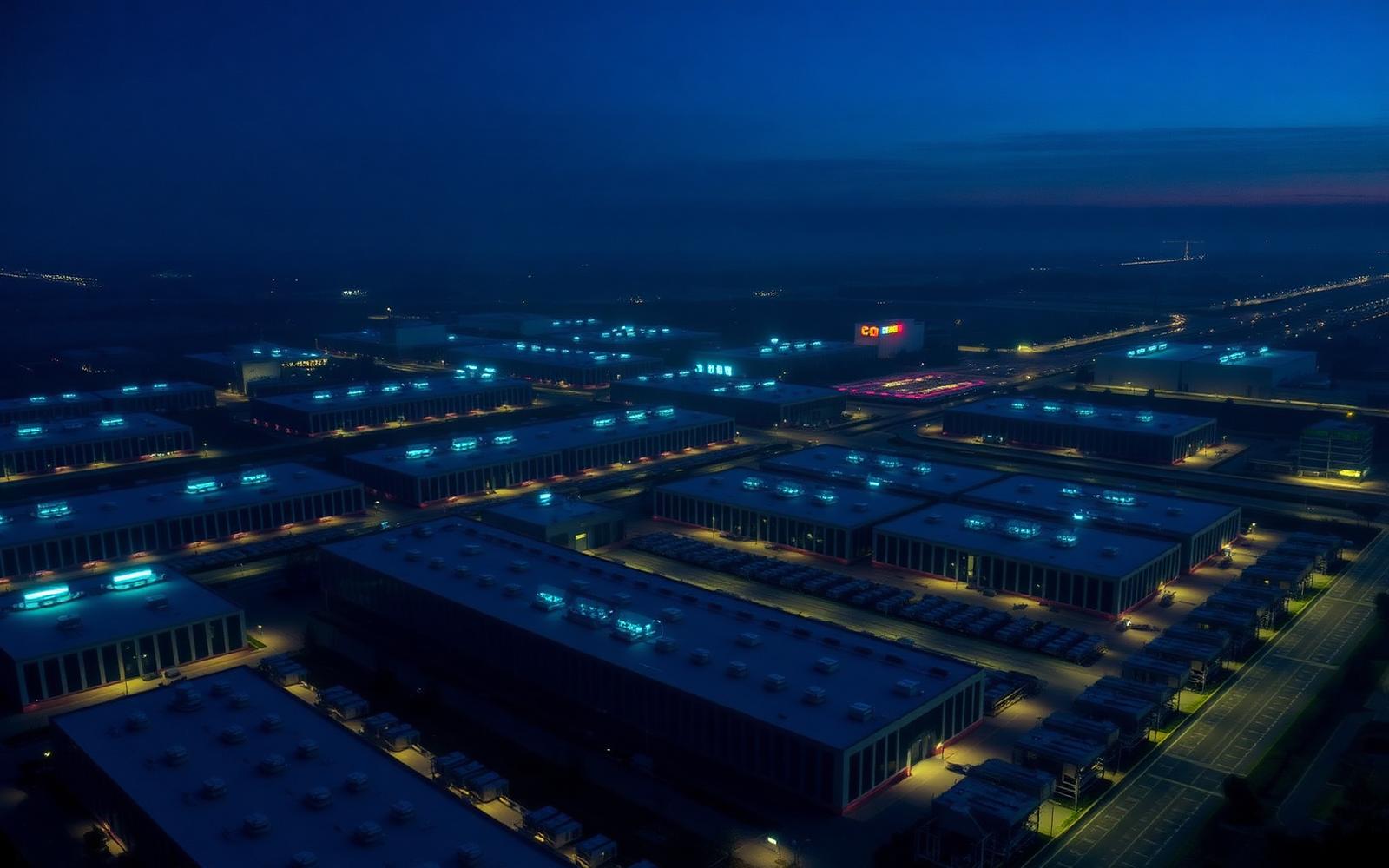
Northern Virginia has the largest concentration of data centers in the world, according to the Northern Virginia Regional Commission, with more than 250 data centers handling roughly 70% of global internet traffic. Loudoun County reports 53.3 million square feet of data centers currently in operation or under development.
That scale has created a highly specialized operating environment. Facility managers are responsible for uptime culture, safety, access control, vendor coordination, customer tours, regulatory expectations, construction activity, and service quality. A cleaning vendor that cannot operate within that environment can create unnecessary risk.
The right provider should bring discipline, documentation, contamination control, and critical environment awareness. The wrong provider may simply bring labor.
Start With the Core Question: Is This Vendor Built for Critical Environments?
Many cleaning companies can clean offices, schools, retail spaces, warehouses, government buildings, and common areas. Far fewer are built to support data centers and other critical environments.
A true data center cleaning partner should understand that:
- Access rules matter
- Documentation matters
- Equipment selection matters
- Dust control matters
- Chemical selection matters
- Communication matters
- Consistency matters
- Crew professionalism matters
- Facility-specific procedures matter
In Northern Virginia, these expectations are especially important because the region supports infrastructure of global significance. Virginia's Joint Legislative Audit and Review Commission states that Northern Virginia represents 13% of all reported data center operational capacity globally and 25% of capacity in the Americas.
When evaluating a provider, the first question should be simple: does this company understand critical environments, or is it repackaging general janitorial services as data center cleaning?
Evaluate Experience With Data Center Zones
Data centers are not uniform spaces. A good cleaning partner should understand how to treat different zones differently.
Important zones may include:
- Data halls — These require controlled procedures, approved equipment, careful movement, and coordination with facility teams.
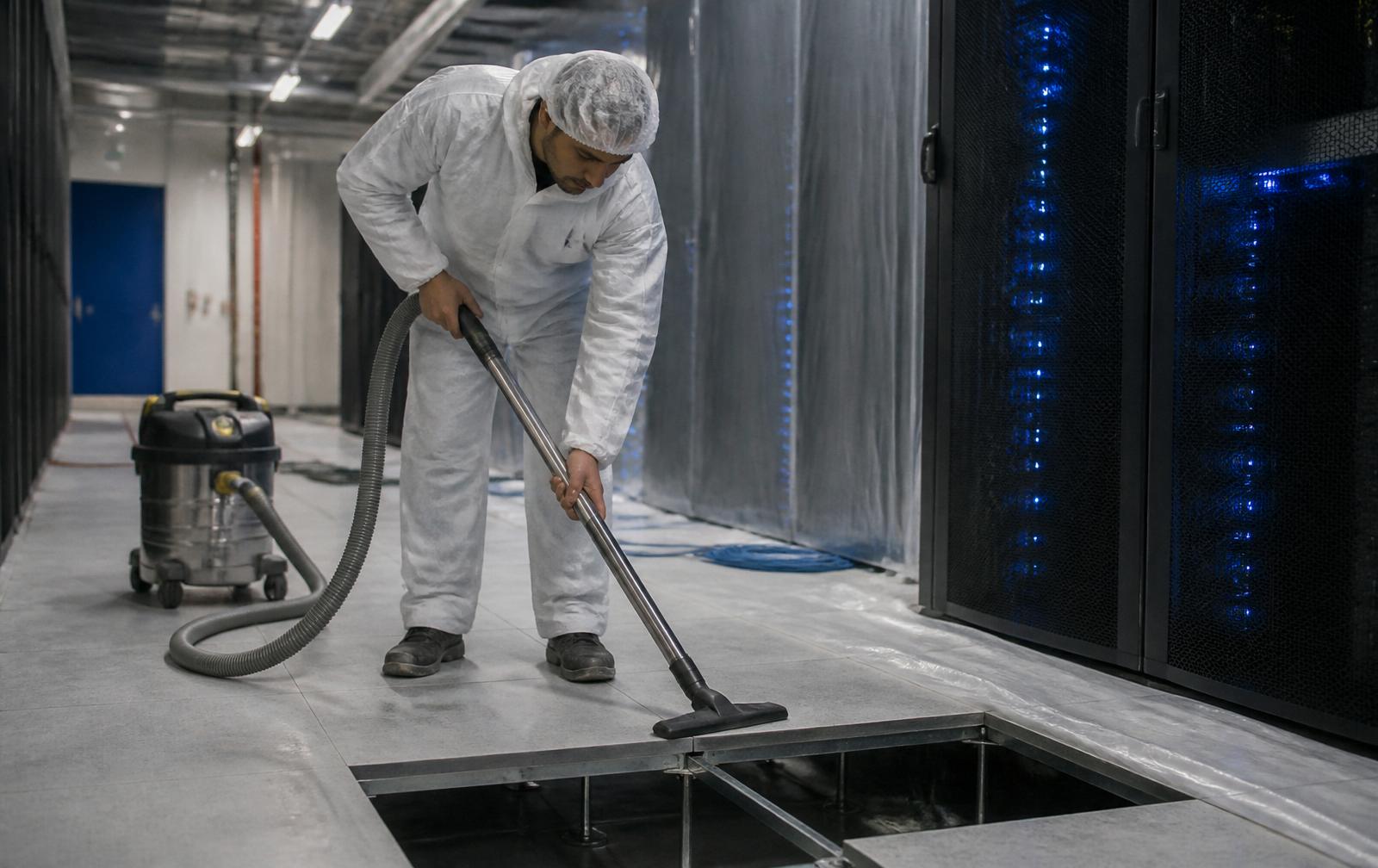
- Raised floor areas — These may require periodic tile lifting, subfloor cleaning, cable awareness, and contamination control.
- Server rooms and network rooms — These are sensitive spaces where access and movement should be tightly controlled.
- Meet-me rooms — These areas require heightened attention to access, cleanliness, and documentation.
- Electrical and mechanical rooms — These spaces require caution, coordination, and appropriate cleaning methods.
- Staging and storage areas — These are often overlooked but can become major sources of dust, cardboard fibers, pallet debris, and packaging waste.
- Loading docks — These are high-risk contamination transfer points because they connect the exterior environment to controlled facility spaces.
- Office and customer-facing areas — These spaces still matter because they shape the impression of customers, auditors, employees, and visitors.
A provider that applies the same cleaning process to every space is not sophisticated enough for a data center environment.
Ask About Contamination Control, Not Just Cleaning Frequency
Many janitorial quotes focus on frequency: nightly, weekly, monthly, quarterly. Frequency matters, but it is only one part of the conversation.
Facility managers should ask:
- What contaminants are most likely to affect this facility?
- Which areas transfer dust into critical zones?
- How will the provider control construction dust and debris?
- What equipment will be used?
- Are vacuums appropriate for sensitive environments?
- How are cleaning chemicals selected and approved?
- How are tools stored and segregated?
- How will work completion be documented?
- How are recurring contamination issues reported?
The goal is not simply to clean more. The goal is to clean intelligently based on facility risk.
This matters in Northern Virginia because ongoing development is a constant part of the operating environment. Loudoun County notes that there has not been a single day without data center construction in Loudoun in more than 14 years. Construction activity creates a persistent need for dust control, transition-zone cleaning, post-construction data center cleaning, and disciplined vendor coordination.
Require Clear Documentation and Reporting
A modern data center cleaning partner should provide documentation that facility managers can actually use.
At minimum, service reporting should include:
- Date and time of work
- Areas serviced
- Tasks completed
- Personnel assigned
- Exceptions or restricted areas
- Observed issues
- Photos where appropriate
- Follow-up recommendations
- Quality assurance notes
For larger operators, multi-site campuses, colocation providers, hyperscale facilities, and customer-facing data centers, reporting should go further. It should provide visibility into recurring trends, open issues, service consistency, and performance metrics.
This is where a KPI-driven model becomes valuable. Instead of forcing facility managers to manage cleaning through emails, texts, and informal updates, a structured dashboard can show what was completed and where attention is needed.
Potential KPIs might include:
- On-time service completion
- Areas completed versus scheduled
- Issue resolution time
- Recurring contamination observations
- Quality inspection scores
- Missed access windows
- Escalated facility concerns
- Photo-documented service completion
- Customer tour readiness status
This gives the facility manager a clearer view of service performance and creates a stronger accountability model.
Why the Right Cleaning Partner Can Lower Total Operating Cost
The lowest cleaning quote is not always the lowest-cost option. In critical environments, a poorly managed cleaning vendor can create hidden costs through missed service windows, inconsistent crews, poor documentation, repeat work, customer-facing deficiencies, contamination transfer, and increased oversight demands on the facility team.
A better procurement question is: Which provider reduces total operating friction?
The right data center cleaning partner can create value by:
- Reducing the likelihood of contamination-related issues
- Supporting better airflow and equipment-adjacent cleanliness
- Helping control construction dust and debris
- Reducing emergency cleaning needs
- Improving audit and customer tour readiness
- Providing documentation that supports compliance and internal reporting
- Reducing the time facility managers spend chasing updates
- Creating more consistent service across multiple facilities
- Identifying recurring problems before they become expensive
This matters in Northern Virginia because the region is both massive and capacity-constrained. CBRE reported that Northern Virginia had only 21.5 MW of available supply at year-end 2025 despite more than 4,039 MW of total inventory, and that 96% of 2026 scheduled supply was already committed.
When facilities are operating in a near-zero vacancy environment, uptime, service consistency, customer confidence, and operational readiness become even more important. A cleaning partner that provides trained crews, documented service, inspection support, and KPI reporting can help facility teams manage risk more effectively than a traditional janitorial vendor.
Consider the Provider's Workforce Standards
The quality of a cleaning program depends heavily on the quality and consistency of the people performing the work. In a data center, workforce standards are especially important.
Facility managers should evaluate:
- Background screening practices
- Training procedures
- Site orientation process
- Crew stability
- Supervisor involvement
- Uniform and identification standards
- Access control compliance
- Safety training
- Confidentiality expectations
- Professionalism around customers and operators
A provider that constantly rotates crews may struggle to maintain consistency. A provider that sends untrained personnel into sensitive environments may create operational risk.
For Northern Virginia operators, the labor issue is especially important because the region's data center ecosystem is large and competitive. NVTC reported that Virginia's data center industry supported more than 112,000 jobs in 2025 through direct, indirect, and induced effects. In a market with that much activity, operators should expect vendors to demonstrate workforce discipline.
Look for Service Flexibility
Data center operations are dynamic. Cleaning needs may change based on construction, commissioning, customer tours, equipment refreshes, incidents, weather, audits, inspections, tenant-specific requirements, or emergency response needs.
A strong data center cleaning provider should be able to support:
- Scheduled recurring cleaning
- One-time deep cleaning
- Raised floor cleaning
- Subfloor cleaning
- Post-construction cleaning
- Pre-tour cleaning
- Emergency response cleaning
- Loading dock and transition-zone cleaning
- Customer-facing area preparation
- Multi-site service coordination
- Critical environment cleaning documentation
The provider should be structured enough to maintain standards, but flexible enough to respond when facility needs change.
Ask How They Handle Access-Controlled Work
Access control is one of the biggest differences between data center cleaning and ordinary commercial cleaning. Cleaning crews may need badges, escorts, approved work windows, restricted route access, check-in procedures, check-out procedures, and site-specific instructions.
Facility managers should ask:
- How does the provider manage crew access?
- Who confirms work windows?
- How are restricted areas handled?
- How are missed access opportunities documented?
- How does the provider prevent unauthorized movement?
- How are site-specific rules communicated to crews?
- What happens if an area cannot be accessed?
- How are exceptions recorded and escalated?
A cleaning provider that lacks access discipline can create problems for security teams, operations teams, and customer commitments.
Evaluate Communication Style
Communication is often what separates a true partner from a commodity vendor.
A strong data center cleaning partner should communicate:
- Before service, to confirm scope and access
- During service, if issues arise
- After service, to document completion
- Periodically, to review quality trends
- Immediately, if a safety, cleanliness, or facility concern is observed
Poor communication creates uncertainty. Good communication gives facility managers confidence.
In a high-pressure market like Northern Virginia, where operators are balancing growth, energy constraints, customer expectations, and vendor complexity, communication discipline is not optional.
Consider Local Market Knowledge
A Northern Virginia cleaning partner should understand the local data center ecosystem. The needs of a facility in Ashburn, Sterling, Chantilly, Manassas, Gainesville, Leesburg, Reston, or Herndon may differ from the needs of a generic commercial property.
Local knowledge can help with:
- Understanding data center operating norms
- Staffing within realistic travel windows
- Supporting urgent needs across the DMV
- Recognizing construction-related contamination patterns
- Serving multiple facilities in the same corridor
- Coordinating around local traffic and site access constraints
- Building familiarity with regional operator expectations
Because Northern Virginia is such a concentrated market, providers that understand the region can offer better responsiveness and more relevant recommendations.
Choosing the Lowest Bid Can Be Expensive
Procurement teams often compare cleaning vendors based on price. That is understandable, but in critical environments, the lowest bid may not represent the lowest risk.
A low-cost provider may lack:
- Specialized training
- Proper equipment
- Documentation systems
- Supervisory oversight
- Consistent crews
- Critical environment experience
- Insurance sophistication
- Quality assurance processes
- Reporting discipline
The hidden costs can include facility team frustration, poor documentation, missed service windows, customer-facing issues, contamination concerns, emergency cleanups, rework, or vendor replacement costs.
A better approach is to evaluate total value. The right provider should reduce management burden, improve facility visibility, support customer confidence, and deliver consistent execution.
Questions to Ask Before Selecting a Data Center Cleaning Partner
Facility managers and procurement teams should ask the following questions:
- 1What experience do you have in data centers or critical environments?
- 2How do you clean raised floor and subfloor areas?
- 3What equipment do you use in sensitive environments?
- 4How do you document completed work?
- 5Can you provide area-by-area service logs?
- 6How do you handle access-controlled spaces?
- 7What training do crews receive before working onsite?
- 8How do you manage quality assurance?
- 9How do you report issues or exceptions?
- 10Can you support post-construction or pre-tour cleaning?
- 11Do you offer recurring KPI reporting?
- 12How do you scale across multiple sites?
- 13How do you manage crew consistency?
- 14How do you handle urgent requests?
- 15What differentiates your service model from standard janitorial providers?
The answers will quickly reveal whether the provider is truly prepared for data center operations.
The Bottom Line
Northern Virginia data centers operate in one of the most important digital infrastructure markets in the world. The region's scale, density, power demand, construction activity, and customer sophistication make facility services more important, not less.
Choosing the right cleaning partner means looking beyond basic janitorial pricing. Facility managers should prioritize critical environment experience, contamination control, access discipline, trained crews, documentation, communication, workforce quality, and KPI-based reporting.
For operators across Ashburn, Loudoun County, Fairfax County, Prince William County, and the broader DMV region, the right cleaning partner can help maintain cleaner environments, reduce operating friction, support audit readiness, improve customer confidence, and lower total operating burden.
Capitol Core Facility Services supports data center and critical environment operators across Northern Virginia with specialized cleaning, contamination control, and audit-ready facility service documentation. Whether your site needs recurring data hall cleaning, raised floor maintenance, post-construction cleaning, or a more accountable facility services partner, Capitol Core is built for the operational standards of Data Center Alley. Request a quote to discuss a tailored cleaning program for your facility.